
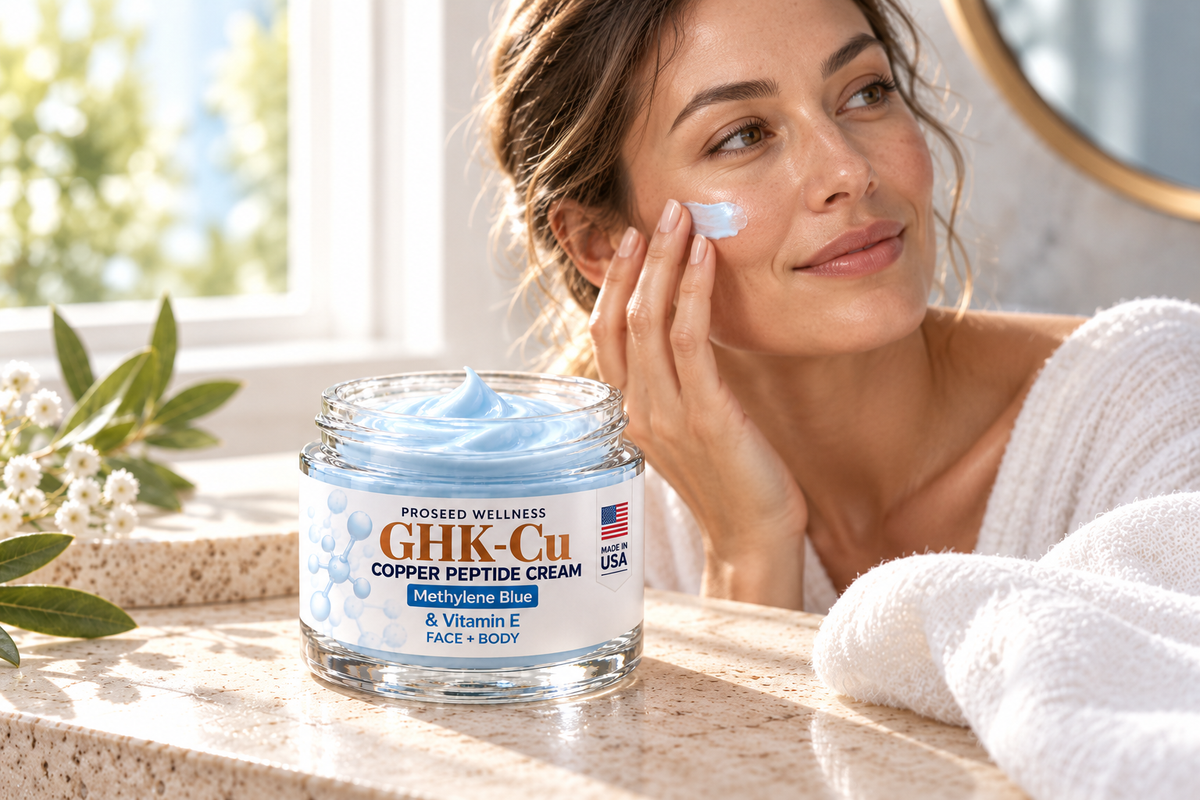
The Longevity Duo: Why Methylene Blue and GHK-Cu Copper Peptides Are Changing Clean Skincare
For decades, the gold standard of anti-aging skincare has relied on a trade-off: irritate the skin today to trigger collagen tomorrow. Synthetic retinoids, abrasive chemical peels, and aggressive acid regimens force cellular turnover by stripping the lipid barrier and inducing low-grade inflammation.
However, cellular biology tells a different story. True skin rejuvenation does not require chemical injury—it requires cellular energy and tissue signaling.
By pairing pharmaceutical-grade Methylene Blue with GHK-Cu (copper tripeptide-1) in a clinical lipid base, we can address skin aging where it actually starts: inside the mitochondria and the cellular extracellular matrix.
1. Methylene Blue: The Mitochondrial Powerhouse of Skin Rejuvenation
Methylene blue is not a synthetic cosmetic novelty. First synthesized in 1876, it has over a century of biomedical use as a nootropic, cellular protectant, and targeted antioxidant. In recent dermatological trials—including landmark research out of the University of Maryland—it emerged as one of the most potent skin-longevity molecules ever tested.
How It Works on Aging Skin
- Optimizes Mitochondrial Respiration: Every cell in your skin requires adenosine triphosphate (ATP) to synthesize structural proteins, clear debris, and repair environmental damage. Methylene blue acts as an alternative electron carrier in the mitochondrial electron transport chain, boosting ATP energy production even in aged or sun-damaged fibroblasts.
- Neutralizes Hydroxyl Radicals: Unlike common antioxidants (such as Vitamin C) that oxidize rapidly when exposed to air, methylene blue cycles between reduced and oxidized states continuously. It specifically scavenges mitochondrial reactive oxygen species (ROS) before they can degrade skin DNA.
- Stimulates Pro-Collagen and Elastin: In comparative studies against standard retinoids and antioxidants, methylene blue consistently outperformed idebenone and retinol in stimulating collagen synthesis while thickening the dermal extracellular matrix—without inducing dermatitis.
2. GHK-Cu Copper Peptides: The Master Repair Molecule
Naturally present in human plasma and saliva, GHK (glycyl-L-histidyl-L-lysine) is a tripeptide that possesses high affinity for copper ions (Cu2+). While levels peak in early adulthood, naturally circulating GHK declines by over 60% as we age, slowing the skin’s innate wound repair timeline.

Key Dermatological Benefits of GHK-Cu:
- Upregulates Dermal Matrix Remodeling: GHK-Cu signals fibroblasts to produce Type I and Type III collagen, elastin, and proteoglycans like hyaluronic acid.
- Modulates Matrix Metalloproteinases (MMPs): Unlike ingredients that only build new tissue, GHK-Cu balances MMP enzymes—the proteins responsible for breaking down damaged, scarred collagen—ensuring fresh, healthy dermal architecture.
- Reduces Post-Inflammatory Erythema: Copper peptides exhibit profound anti-inflammatory properties, calming redness, rosacea flare-ups, and photodamage.
3. Why This Duo Replaces Harsh Retinols
| Mechanism / Feature | Standard Retinol (Vitamin A) | Methylene Blue + GHK-Cu |
|---|---|---|
| Primary Action | Accelerated peeling & cell shedding | Mitochondrial ATP optimization & signaling |
| Barrier Integrity | Often thins or compromises stratum corneum | Strengthens lipid barrier and collagen density |
| Skin Sensitivity | Causes erythema, flaking, photo-sensitivity | Calms inflammation; suitable for rosacea-prone skin |
| Sun Tolerance | Strictly night-use; increases UV vulnerability | Exhibits broad photoprotective antioxidant properties |
4. The Clinical Herbalist Difference: Delivery Matters
The most common failure in modern skincare isn't the active ingredient—it is the delivery mechanism.
Water-based peptide serums and synthetic gel carriers often sit on the surface of the skin or rely on synthetic penetration enhancers (such as propylene glycol, PEGs, and parabens) that disrupt the delicate skin microbiome.
At ProSeed Holistic Wellness, our formulations are led by clinical aromatherapists and herbal practitioners. We understand that your skin barrier is an oil-based lipid matrix:
- High Purity USP Sourcing: We use only ultra-pure, USP-grade, third-party tested Methylene Blue—free from industrial impurities and heavy-metal contamination often found in textile dyes.
- Whole-Plant Lipid Co-Factors: We combine targeted biomolecules with restorative lipid carriers, ancestral fats, and therapeutic-grade botanicals that mimic the skin's natural sebum profile.
- Synergistic Transdermal Delivery: Delivering cellular actives alongside bio-identical fatty acids allows deeper cellular uptake while keeping the stratum corneum intact, nourished, and hydrated.
Frequently Asked Questions
Will Methylene Blue turn my face blue?
No. While pure methylene blue is an intense cobalt dye, our serums and creams are formulated at precise, bio-active micromolar concentrations. It absorbs cleanly into the skin without staining your complexion or leaving residue on pillows.
Can I use GHK-Cu and Methylene Blue with my existing routine?
Yes. Unlike high-percentage AHA/BHA chemical exfoliants or tretinoin, this pairing works gently alongside daily moisturizers, sunscreen, and ancestral tallow balms. We recommend avoiding simultaneous use with high-percentage direct L-ascorbic acid (Vitamin C), as acidic pH can alter peptide stability.
How quickly will I see results?
Most users report improved skin elasticity, calm redness, and increased radiance within 10 to 14 days. Dermal structural remodeling (fine lines, skin firmness, and deep barrier repair) typically peaks after 8 to 12 weeks of consistent application.
Ready to upgrade your daily skincare ritual? Explore our practitioner-crafted GHK-Cu Copper Peptide Cream with Methylene Blue and give your skin the cellular nourishment it deserves.
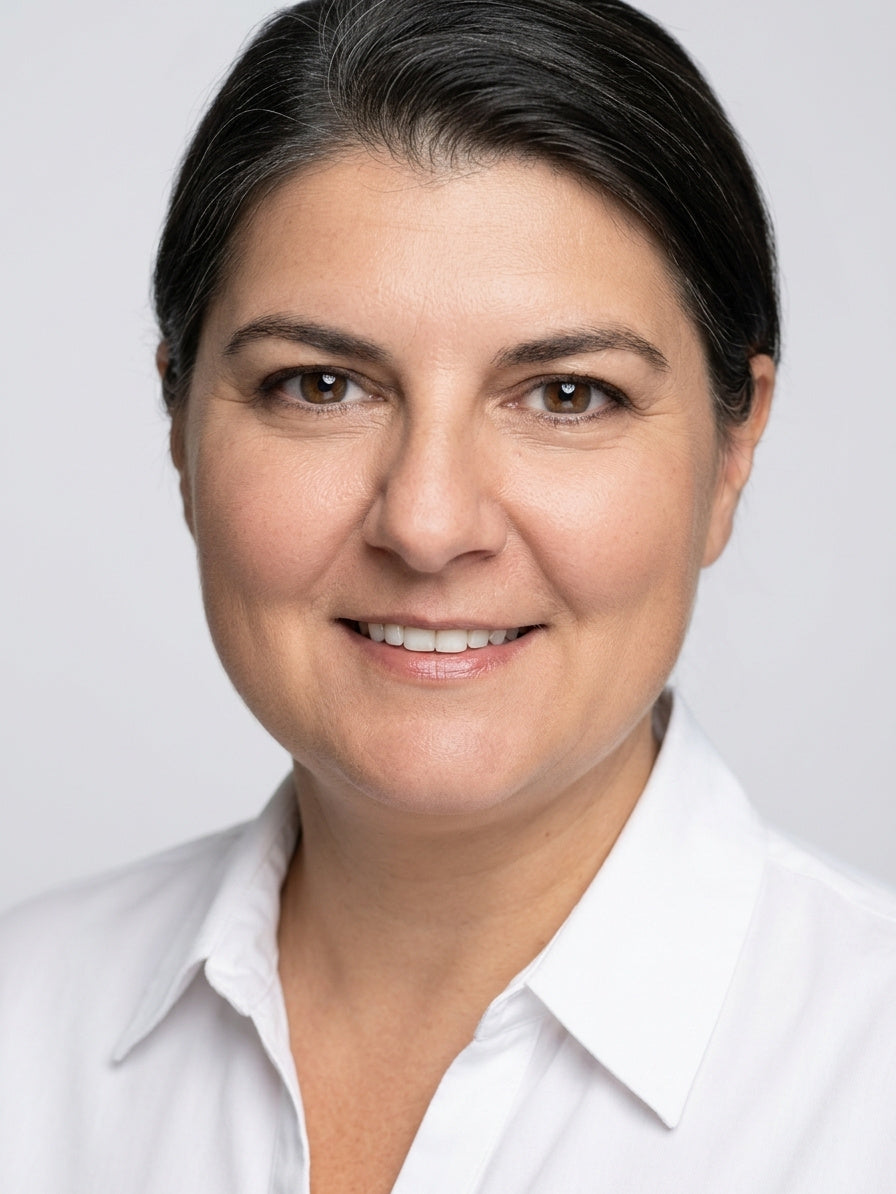
Written by Buket Kaptan
Buket Kaptan holds a master’s degree in Complementary and Alternative Medicine. She is a NAHA-certified Professional Aromatherapist and Aromatherapy Educator, an AIA-certified Aromatherapist, and an academic member of the American Botanical Council. She is the founder of ProSeed Wellness and Buket Kaptan Aromatherapy and brings her background in aromatherapy and holistic wellness to thoughtful skincare education.

Leave a comment
This site is protected by hCaptcha and the hCaptcha Privacy Policy and Terms of Service apply.